BranditScan Offers Labor Day Weekend Sale

LOS ANGELES — BranditScan is celebrating Labor Day Weekend with a 20 percent off sale for one month of its premium service.

The deal will last from Saturday through Monday. Creators can access this limited time offer with the code “LABOUR20” and for those curious about the service, a free scan is available.

The company is “an industry leading security platform for brand and content protection,” a rep said. “BranditScan offers various services including DMCA takedowns, Google delisting, catfish account takedowns, brand monitoring, and much more.”

To learn more about this offer, visit BranditScan.com.

Follow BranditScan on Twitter.

Related:  

Eldorado to Attend New International Lingerie Show

BROOMFIELD, Colo. — Eldorado Trading Company, will be attending the 2022 New International Lingerie (ILS) show Sept. 12-13 at the Tuscany Suites and Casino in Las Vegas.

According to a company rep, Eldorado will be hosting a booth that will showcase Eldorado Exclusives, products that include lingerie, pleasure products, BDSM, kink, luxury items.

“Guests visiting booth 301 will have the opportunity to see and touch the exciting new products,” a rep added.

Derek DalPiaz, Eldorado director of sales and marketing, will be meeting with customers and manufacturers throughout the event.

“ILS is a great opportunity to connect with key people from across the industry. Be sure to stop by the booth, say hello, and check out the top brands that only Eldorado carries,” he said.

For more information about the Eldorado ILS booth, email the Eldorado Marketing department at marketingteam@eldorado.net.

Visit Eldorado online and follow the company on Twitter.

Related:  

ASACP Names Lion’s Den, DatingGold, Kate’s Tube ‘Featured Sponsors’ for September

LOS ANGELES — ASACP has named Lion’s Den, DatingGold, and Kate’s Tube as its featured sponsors for September.

ASACP’s Executive Director Tim Henning shared that its sponsors rank among the industry’s most respected companies and exemplify corporate responsibility, ethical business practices, and simple technical measures can help protect minors and other sensitive users from accidental exposure to age-restricted materials online.

“By working together toward the common goal of protecting children and vulnerable groups, industry leaders and other stakeholders can improve the enjoyment and safety of internet surfing for everyone,” Henning said. “ASACP’s diverse family of sponsors reflects the wide range of companies that support our efforts to preserve freedom of choice for adults while protecting the innocence of youth.”

These are the ASACP descriptions of its August featured sponsors:

Lion’s Den

An ASACP Title Sponsor that has supported the association since 2006, Lion’s Den provides the very best in sexual health products, including a range of adult toys, lingerie, massage oils, literature, novelty items, and more, through its retail superstores and online at LionsDen.com.

Lion’s Den advocates for a sex-positive perspective on intimacy and sexual wellbeing and strives to break the stereotypes and stigma surrounding sex by providing comprehensive educational resources to empower everyone to enjoy life to the fullest. Lion’s Den partners with many organizations to amplify awareness regarding sexual health. Through joint efforts, Lion’s Den provides valued resources to support organizations focused on sexual health and education, first amendment rights, child protection, and human trafficking.

“We’re proud that our community involvement includes supporting ASACP’s efforts to protect kids from exploitation and adult material,” said Lion’s Den CEO Michael Moran. “Each of these areas directly relates to the adult industry, and Lion’s Den is proud to support causes that improve their brand’s customer experience and the industry as a whole.”

DatingGold

A valued ASACP Corporate Sponsor since 2007, casual dating and webcam affiliate program DatingGold.com demonstrates its commitment to protecting children by including the RTA label on its flagship cam site WebCamClub.com, and dating site, AmateurMatch.com. It also offers a variety of other niche cam and dating sites, as well as co-branded affiliate sites.

Although ASACP holds its sponsors to the highest ethical standards, cam and dating sites are faced with additional membership requirements because they contain user-generated content. Because UGC production occurs outside of commercial channels that confirm a performer’s proof of age, extra steps are needed to ensure that only lawful images and consenting adults are displayed.

Here, DatingGold excels as an example of how proactive measures by content providers can make a difference in keeping children safe on (and from) the internet.

Kate’s Tube

Since 2019, KatesTube.com has been a proud Corporate Sponsor of ASACP.

“We cooperate with this organization to make the internet safer for children and cleaner for adults,” a company spokesperson said. “While we are not content creators, we monitor the site regularly to ensure that we abide by all relevant policies and guidelines, such as 18 USC ‘2257.”

The spokesperson noted that KatesTube.com is committed to improving its visitor safety and overall user experience. As such, it is increasing its investment and resources to make its network of sites even cleaner and more secure.

It is an effort and investment that the operators of Kate’s Tube hope will serve as an excellent example for its peers to follow.

“We encourage other adult tube sites to step up to an industry leadership role by sponsoring ASACP. Let’s all work together to continue making a tangible difference in online child safety,” Henning said.

“ASACP is grateful to Lion’s Den, DatingGold, and Kate’s Tube for their commitment, generosity, and leadership in supporting the association and its mission to keep children out of and away from adult-oriented content,” Henning concluded. “ASACP’s sponsors are united in building a better future for the industry and society’s most vulnerable members. We thank them for this and encourage others to join in this noble crusade.”

Visit ASACP online and on Twitter; contact Henning at tim@asacp.org.

CoinDesk Publishes Crypto Guide for Sex Workers

CoinDesk Publishes Crypto Guide for Sex Workers

LOS ANGELES — Leading crypto news site CoinDesk has published a guide for adult creators and sex workers on how to use technologies like crypto, non-fungible tokens and decentralized finance to get paid for their content and services.

The guide, one of CoinDesk’s “Crypto Explainer+” articles, was penned by Megan DeMatteo and ran as part of the site’s “Sin Week” series.

“One could argue that crypto is simply a rational option in an industry that regularly faces police raids, censorship and blacklisting from legacy payment processors,” DeMatteo noted.

The article features cryptocurrency sector companies and initiatives such as NFTreats, Playboy NFTs and Spankchain. 

“The existence of an adult creator on these platforms is very precarious,” NFTreats’ Ernest told CoinDesk, citing abrupt changes in terms and conditions, withholding of payments and pressure from “Christian fundamentalists or politicians.”

For those in the sex work industry, DeMatteo noted, “the philosophy of decentralization goes beyond porn. Due to stigma, those who work in adult entertainment or sex work often turn to grassroots organizing to meet their needs. For example, the mutual aid organization Red Canary Song distributes food and medical care to Asian American sex workers, and the advocacy coalition DecrimNY works to destigmatize, decriminalize and decarcerate those who perform sexual labor, whether by choice, circumstance or coercion.”

To read “How to Pay for Porn With Crypto,” visit CoinDesk.

Related:  

Mark Zuckerberg Defends Porn Ban, Denies ‘Shadowbans’ Exist

MENLO PARK, Calif. — During a recent interview, Facebook founder, Instagram owner and Meta CEO Mark Zuckerberg doubled down on his platforms’ total ban on “pornography” and flatly denied the existence of “shadowbans” against specific users.

The rambling three-hour interview, which took place on Joe Rogan’s Spotify podcast, was called by The Independent’s reviewer, “one of the most excruciating things I’ve ever seen.”

Zuckerberg pontificated on a variety of topics, including his background, the history of his material and professional success, his self-image now and his predictions for a metaverse-intensive future.

At one point during the chat, Rogan pressed Zuckerberg on his companies’ moderation policies, especially concerning free speech, which for the podcaster, comedian and MMA announcer mostly involves the deplatforming of his friends and associates from the political right.

Twitter vs. Meta

Rogan was also particularly interested in Zuckerberg’s opinion about Twitter, which is currently at the center of a debate involving would-be purchaser Elon Musk, Rogan’s friend. Zuckerberg demurred from commenting, stating that he is “not super deep on Twitter’s policies.”

“Twitter has pornography,” Rogan said out of the blue. “I mean, they have hardcore pornography. You could just accidentally stumble onto someone you follow’s page and they’ll have hardcore pornography.”

“Pornography is a thing that we don’t allow,” Zuckerberg decreed with automated precision. “I think it’s somewhat controversial because, I mean, you could make a pretty good argument, I think, that this isn’t doing physical harm to people. I know that there’s arguments on both sides of that, so I don’t want to go super deep on that, but I’d say our reason for not wanting pornography is more for the feel of the community than the sense of harm.”

Zuckerberg’s companies’ terms of service define “pornography” to include any images of “female nipples,” and lump it together with content featuring violence, terrorism and self-harm.

The Meta CEO added, “Obviously, child pornography is different. That’s obviously real harm, but I think that’s one category of content where it’s kind of more of an editorial moderation decision. I don’t think it’s a political decision.”

Expanding on why Meta platforms reject “pornography,” Zuckerberg said, “We want the feel of the service to be about people connecting with their friends and family and not necessarily coming across that kind of content.”

In Zuckerberg’s opinion, “Most of the stuff that I think gets taken down, actually most people would agree needs to get taken down. Then I think there’s mistakes and then there’s stuff like how do you handle misinformation, which I think society as a whole doesn’t agree on.”

Shadowbans? What Shadowbans?

Rogan then pressed Zuckerberg on the topic of “shadowbans,” which erase individual users from searches, autofills and even appeals forms. This phenomenon has been experienced by a variety of users, from political commentators to virtually every sex worker, including adult performers.

“One thing that people freak out about, and oftentimes I’m a little skeptical of their concerns, is people think they’re being shadowbanned always,” Rogan said with some trepidation. “People think they’re being shadowbanned. Is shadowbanning a real thing and what does that mean?”

“There’s no policy that is ‘shadowbanning,’” Zuckerberg claimed. “I think it’s sort of a slang term, but that maybe refers to some of the demotions that we’re talking about. If someone posts something that gets marked as false by a fact checker, then it’ll get somewhat less shown in the feed.”

“Just that post or all of their posts for the future?” Rogan asked.

“If you do it once, then it’s that … there’s kind of different rules for pages and groups and different things. Then there can be some kind of broader policy that applies, but when I look into this stuff — a lot of my friends and people I know just send me examples, because unfortunately there are a lot of mistakes.”

To the likely surprise of thousands of sex workers who may have felt like they were being gaslit by one of the world’s wealthiest and most powerful men, Zuckerberg then added with a straight face, “As it relates to concerns about shadowbanning, a lot of the time when I look into stuff, people attribute some motive or Meta has some stupid policy in place that blocked this, or they’re banning this thing. A lot of the time it was either just a mistake, so nothing was supposed to happen, but there was some bug in the system or some system didn’t work the way it was supposed to, which is a real issue, but it’s not an ideological issue.”

‘Just Work Out’

The Meta CEO added that some perceived shadowbanning might be explained this way: “Maybe their post just wasn’t as good or something, and it just didn’t get the distribution that they wanted it to.”

After discussing a specific example of a friend of Rogan’s that Zuckerberg had looked into, the podcaster suggested that people are responding to “a lack of transparency as to how does this all work. They assume there’s nefarious intentions and that someone’s censoring them.”

Zuckerberg attempted to get the host to empathize with him.

“I’m curious how you’d think about this if you were in my position,” he pled, without a hint of emotion in his delivery.

“I’ve thought about it,” Rogan admitted. “I imagine it would be incredibly overwhelming, and I’d probably be on Xanax. I don’t know.”

“Or you’d just work out more,” counseled Zuckerberg, who visibly buffed out his scrawny programmer’s physique as he entered middle age. “Just work out.”

Jenna Love, Alana Luv Guest on ‘The SDR Show’ Tonight

New York — Jenna Love and Alana Luv, along with Lucy Sunflower, guest on a new episode of Gas Digital Network’s “The SDR Show” with hosts Big Jay Oakerson and Ralph Sutton at 9 p.m. tonight.

The trio will be playing a game of “Naked Twister” on the popular comedy podcast. 

“I am so excited to lose my SDR cherry tonight, especially because I’m playing with my girl Alana Luv,” said Love. “I don’t mind spending an evening naked going red foot right, blue hand green, with that cutie pie.”

“It’s great to be back on The SDR Show again; I love Lucy and Jenna, we are going to have so much fun, and I have a special announcement too,” Luv added.

“I love playing games; I think I will take this game of Naked Twister and maybe have an orgasm while I’m doing it, too,” offered Sunflower. 

Live episodes of “The SDR Show” can be found here.

Follow Jenna Love, Alana Luv, Lucy Sunflower, and “The SDR Show” on Twitter.

Related:  

Sliquid Institutes Minimum Advertised Price Policy for Vendors

Sliquid Institutes Minimum Advertised Price Policy for Vendors

DALLAS — Personal lubricant manufacturer Sliquid has instituted a minimum advertised price policy for all resellers.

Applying across all platforms, including brick-and-mortar stores, company websites, and third-party reseller sites, including Amazon, the policy sets the MAP at 20% below the manufacturer’s suggested retail price. Sliquid sets the MSRP in its official price list.

“We recognize that our high-quality retailers invest time and resources to deliver an extraordinary customer experience through knowledgeable staff and compelling vendor presentation,” said Colin Roy, Sliquid senior VP. “To support these efforts, Sliquid wishes to establish policies that allow our resale partners to earn the profits necessary to maintain the high level of customer excellence people have come to expect from Sliquid retailers.”

A rep further explained the reason for the new policy.

“The purpose of the MAP policy is to encourage fair competition across all distribution channels, preserve brand identity and value, permit smaller retailers to compete with larger retailers, mitigate underpricing and foster reasonable retailer margins,” the rep said. “While this new MAP policy takes effect immediately, the company is providing a courtesy grace period of one month for retailers to implement the policy. Full enforcement of the policy will take effect at the beginning of Q4.”

To read the new policy’s terms and conditions, click here; follow Sliquid on Twitter.

Related:  

Atlantis Deep Launches Official 24-Hour Livestream Site ‘AtlantisDeep.live’

LONDON — Atlantis Deep has launched her official site, AtlantisDeep.live, that will live stream 24/7 from her home.

The site also includes Deep’s roommate Molly as well as her friends in every room of her house.
 
Deep was motivated to stream unfiltered and uncensored from her house due to being “bored with glossy edits of photos and videos,” a rep said. This allows subscribers look at her everyday life via a total of eight cameras.
 
Deep took a moment to share her excitement over this project.

“This is a huge undertaking, but I’m ready for it. Living your life on camera 24 hours a day is pretty wild, but my fans love the idea. When I saw how much my fans enjoyed my amateur content more than the polished studio-quality photos and videos, I knew I was onto something,” she said.

“Molly and I are so excited the site is finally live and can’t believe how many subscribers we already have. My fans should definitely subscribe now, so they don’t miss a moment of the action,” Deep continued.

For more information about the site, visit AtlantisDeep.Live.
 
Follow Atlantis Deep on Twitter.

Related:  

Orion Now Shipping You2Toys ‘Your New Favourite’ Line

Orion Now Shipping You2Toys 'Your New Favourite' Line

FLENSBURG, Germany — Orion Wholesale is now shipping the Your New Favourite line of pleasure products from You2Toys.

The new line includes the Wand Massager, the Licking Vibrator, the Double Vibrator, the G-Spot Vibrator and the Penis Vibrator. 

“All the sex toys from ‘Your New Favourite’ are made out of silicone, which feels great against the skin during pleasure and play,” said a rep. “They can be recharged with the included USB cable.”

The Wand Massager features three speeds and five vibration modes; each of the other vibrators features 10 vibration modes. All come in yellow.

“‘Your New Favourite’ sex toys are delivered in high-quality packaging with a description of the product in various languages,” said the rep. “The packaging can also be stood up or hung up with the hanger in the middle. More products will now fit into the sales space because they’re more compact. They also take up less space when they’re in storage.”

For more information, visit Orion online or email wholesale@orion.de.

Related:  

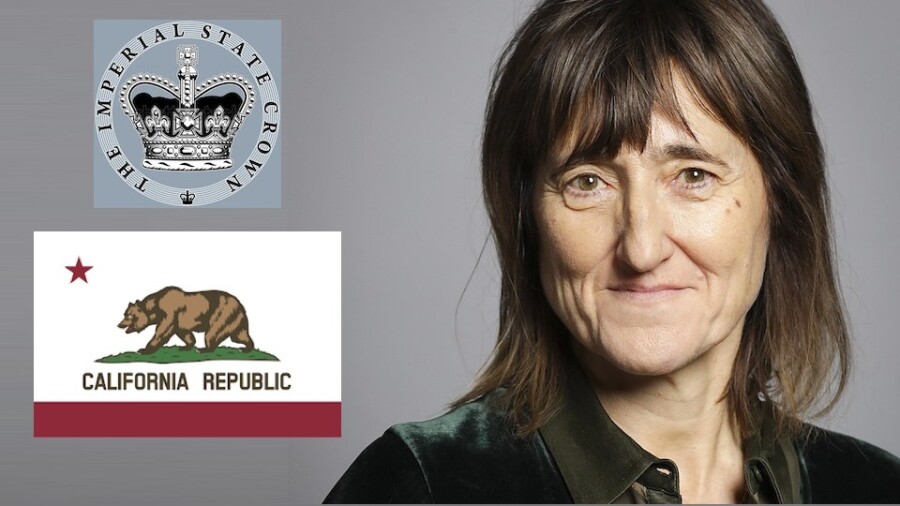
California Passes Controversial Age Verification Bill Drafted by British Baroness

SACRAMENTO — The California legislature on Tuesday passed a highly controversial bill mandating sweeping yet vague age verification measures for any web site “likely to be accessed by children,” now waiting to be signed into law by Governor Gavin Newsom.

AB 2273, also called the California Age-Appropriate Design Code Act, was drafted and lobbied for by  British noblewoman, philanthropist and filmmaker Beeban Kidron. 

If signed into law, the bill would require websites — including all websites containing adult content accessible in California — to determine the age of all users with “a reasonable level of certainty.”

The legislation further mandates that websites and platforms must overhaul privacy and safety standards based on the age verification requirement.

Ostensibly aimed at “making online platforms safer for children,” the bill requires “web services ‘likely to be accessed by children’ to conduct a survey assessing the potential risks for users under 18,” tech news site The Verge reported.

“Among many other measures, the sites must limit using personal information from minors and avoid collecting geolocation data unless ‘strictly necessary,’” the report continued. “It similarly restricts using ‘dark patterns,’ a general term for manipulative design features that isn’t defined in the text.”

A British Baroness With Hollywood Ties

The California Age-Appropriate Design Code Act was patterned after the U.K.’s “Children’s Code,” a set of regulatory standards devised by a British aristocrat with California and Hollywood ties, the Baroness Beeban Kidron.

Kidron funds a nonprofit called the 5Rights Foundation, which backed the California bill. One of its goals is to expand the scope of the federal Children’s Online Privacy Protection Act and change the definition of “child,” for online purposes, from anyone under 13 to anyone under 18.

The push for AB 2273 comes in the wake of a media panic campaign spreading the notion that “Instagram and other services ‘hook’ children with addictive features and can make them vulnerable to exploitation or bullying, among other harms,” The Verge reported.

Baroness Beeban Kidron is a 62-year-old former photographer, film producer and director, philanthropist and self-appointed “advocate for children’s rights in the digital world.” She has founded and chairs charities the 5Rights Foundation and Into Film.

Her U.K. feature films include “Vroom,” “Oranges Are Not the Only Fruit” and “Antonia and Jane.” In 1992 she moved to the U.S., where she worked with Miramax Pictures’ Harvey Weinstein. She directed “Used People,” the sex work documentary “Hookers, Hustlers, Pimps and Their Johns,” “Shades of Fear,” “To Wong Foo, Thanks for Everything! Julie Newmar” and romantic comedy sequel “Bridget Jones: The Edge of Reason,” starring Renée Zellweger, Colin Firth and Hugh Grant.

In 2012, Queen Elizabeth made Kidron a Baroness and she was introduced in the House of Lords. She was appointed on the recommendation of the House of Lords Appointments Commission and is an unelected “life peer,” legislating in the U.K. as a member of the House of Lords Democracy and Digital Technologies Committee.

Kidron spoke at length to The Guardian in 2021 about what she sees as her crusade for “children’s rights” online, which she took up immediately after being elevated as a noblewoman by the Queen.

“When she first began talking to her peers in the House of Lords about the rights of children on the internet, Baroness Kidron says she looked like ‘a naysayer,’ like someone who was ‘trying to talk about wooden toys’ or, in her husband’s words, like ‘one middle-aged woman against Silicon Valley,’” The Guardian gushed. “It was 2012 and the film-maker and recently appointed life peer was working on her documentary ‘InRealLife,’ spending ‘hundreds of hours in the bedrooms of children’ to discover how the internet affects young lives. What she saw disturbed her.”

“I did what they were doing — gaming, falling in love, watching pornography, going to meet-ups, making music — you name it, it happened,” Kidron told The Guardian. “Digital services and products were treating them as if they were equal,” she said. “The outcome of treating everyone equally is you treat a kid like an adult.”

Digital Rights and Privacy Groups Sound the Alarm

The Baroness’ successful interventions in U.K. and now California online policy, however, have raised the alarm for privacy, civil liberty and digital rights activists.

In a series of articles, Mike Masnick of tech news site Tech Dirt has been highlighting the dangers of Kidron’s crusade and of the strict but vague measures in AB 2273, which she helped draft.

Calling the situation “incredibly dangerous,” Masnick warned that the bill “is not just extremely problematic, but at the same time it’s also impossible to comply with. I hope Governor Newsom will veto it, but it seems unlikely.”

Masnick quoted Section 230 and digital rights expert Eric Goldman, an outspoken academic, who provided the following breakdown of what he characterizes as the bill’s censorship-happy, privacy-busting overreach:

  • “First, the bill pretextually claims to protect children, but it will change the Internet for EVERYONE. In order to determine who is a child, websites and apps will have to authenticate the age of ALL consumers before they can use the service. NO ONE WANTS THIS. It will erect barriers to roaming around the Internet. Bye bye casual browsing. To do the authentication, businesses will be forced to collect personal information they don’t want to collect and consumers don’t want to give, and that data collection creates extra privacy and security risks for everyone. Furthermore, age authentication usually also requires identity authentication, and that will end anonymous/unattributed online activity.
  • Second, even if businesses treated all consumers (i.e., adults) to the heightened obligations required for children, businesses still could not comply with this bill. That’s because this bill is based on the U.K. Age-Appropriate Design Code. European laws are often aspirational and standards-based (instead of rule-based), because European regulators and regulated businesses engage in dialogues, and the regulators reward good tries, even if they aren’t successful. We don’t do “A-for-Effort” laws in the U.S., and generally we rely on rules, not standards, to provide certainty to businesses and reduce regulatory overreach and censorship.
  • Third, this bill reaches topics well beyond children’s privacy. Instead, the bill repeatedly implicates general consumer protection concerns and, most troublingly, content moderation topics. This turns the bill into a trojan horse for comprehensive regulation of Internet services and would turn the privacy-centric California Privacy Protection Agency/CPPA) into the general purpose Internet regulator.
  • So the big takeaway: this bill’s protect-the-children framing is designed to mislead everyone about the bill’s scope. The bill will dramatically degrade the Internet experience for everyone and will empower a new censorship-focused regulator who has no interest or expertise in balancing complex and competing interests.”

“It is astounding to me that the legislature appears to have just wholly ignored all of Goldman’s clearly laid out and explained problems with the bill,” Masnick commented.

Both the Electronic Frontier Foundation and tech industry trade group NetChoice have questioned the constitutionality of the bill.

“At this stage, we’re focused on Governor Newsom vetoing this dangerous legislation. When it comes to what happens if he doesn’t, we have nothing to say about that at this point,” NetChoice spokesperson Krista Chavez told The Verge.